

Article en français Un Une Du De la

Un, une, du, de la… Le guide complet des articles français

Vous apprenez le français et vous avez l’impression que les Français ont inventé les articles uniquement pour vous compliquer la vie ? Ne vous inquiétez pas, vous n’êtes pas seul(e).

Aujourd’hui, nous allons enfin nous occuper des articles qui empêchent de dormir tous ceux qui apprennent le français : l’article indéfini, l’article défini et l’article partitif. Après avoir lu ce texte, vous ne direz plus jamais au serveur que vous voulez manger « une poule entière » alors que vous n’avez envie que d’un morceau de viande.

Attention : ce texte est long, mais après l’avoir lu, la réalité française vous apparaîtra comme un jour d’été.

Qu’est-ce qu’un article ?

En français, un nom n’apparaît jamais seul. Il est toujours précédé d’un article qui indique non seulement son genre grammatical (insérer le lien vers l’article sur le genre en français), mais aussi si l’objet en question est connu des interlocuteurs. En français, on distingue les articles définis, indéfinis et partitifs.

Avant d’entrer dans les détails, voici un petit aide-mémoire :

Qu’est-ce qu’un article défini ?

L’article défini détermine le nombre et le genre des noms qui le précèdent.

Masculin : le (par exemple : le chat – ce chat).

Féminin : la (par exemple : la maison – cette maison).

Avant une voyelle : l’ (par exemple : l’école – cette école, l’homme – cet homme).

Pluriel : les (par exemple : les amis – ces amis).

Vous l’utilisez lorsque l’objet dont vous parlez est déjà connu de votre interlocuteur.

Qu’est-ce qu’un article indéfini ?

C’est un mot que vous utilisez lorsque vous parlez d’une chose dénombrable que vous considérez comme une unité distincte. Quelque chose que vous pouvez compter sur les doigts : une pomme, deux chaises, une voiture. Vous l’utilisez quand vous mentionnez quelque chose pour la première fois ou quand il ne s’agit pas d’un objet concret connu de votre interlocuteur.

Masculin : un (par exemple, un croissant)

Féminin : une (par exemple, une baguette)

Pluriel : des (par exemple, des croissants)

Qu’est-ce qu’un article indéfini ?

C’est un mot que vous utilisez lorsque vous parlez d’une quantité indéterminée de quelque chose qui ne peut pas être compté en unités (masse, liquide, matière en vrac, concepts abstraits). Il répond à la question « Quelle quantité de quoi ? ». En français, on le traduit souvent mentalement par « un peu ».

Masculin : du (abréviation de: de + le)

Féminin : de la

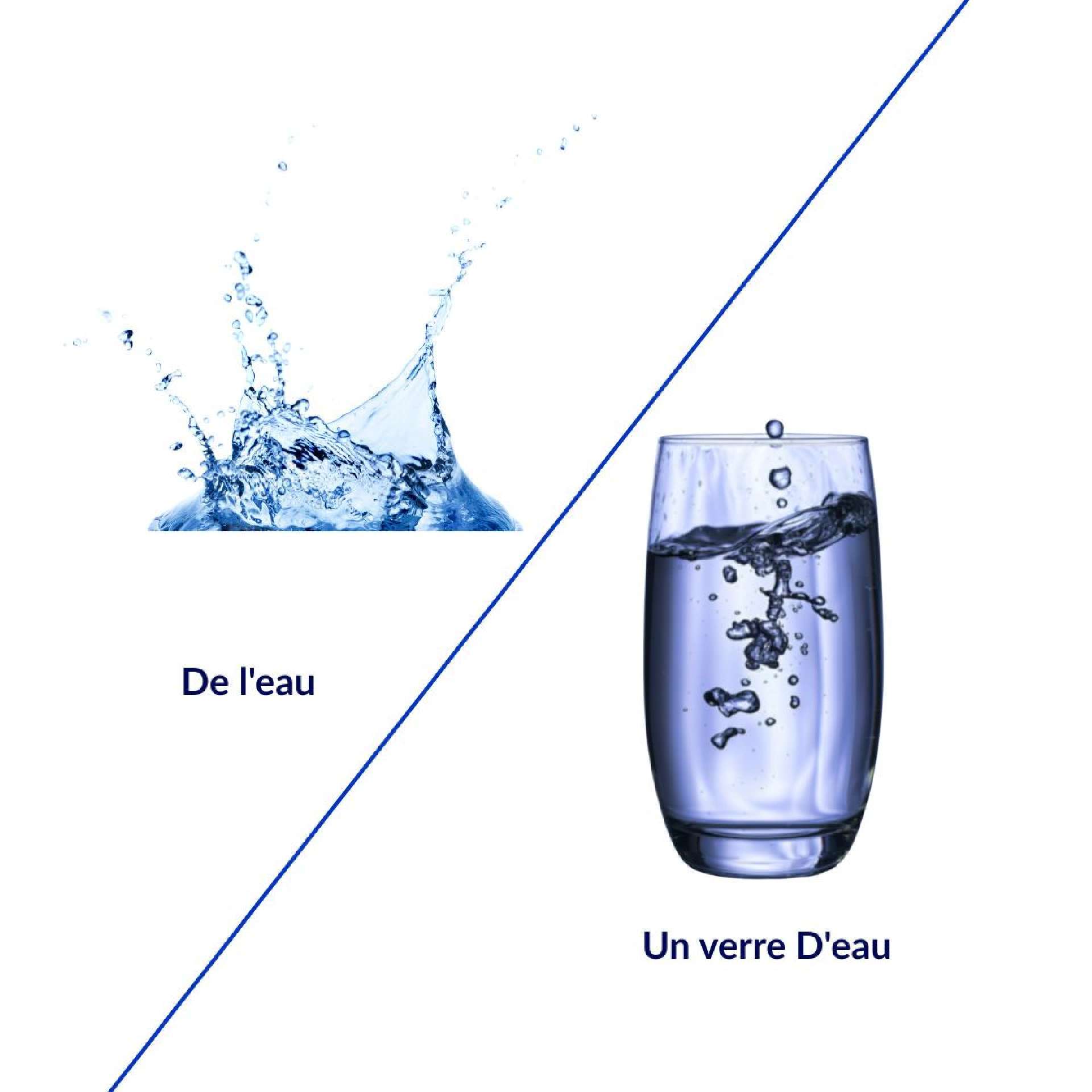
Avant une voyelle : de l’ (par exemple, de l’eau)

Pluriel : des (moins fréquent, dans des contextes spécifiques, dont nous parlerons plus tard).

L’article indéfini : c’est-à-dire « quelque », « un ».

Commençons par quelque chose de plus simple. L’article indéfini est fondamental. Quand l’utilise-t-on ?

Vous l’utilisez pour désigner des choses dénombrables, c’est-à-dire celles qui peuvent être comptées à l’unité (un croissant, deux voitures, trois problèmes) et qui :

  • Sont mentionnées pour la première fois.
  • Ils font partie d’un ensemble (elles représentent un groupe, mais ne sont pas spécifiques).
  • Ils peuvent être comptés physiquement (un, deux, trois…).

Formes :

UN – genre masculin (par exemple, un croissant)

UNE – genre féminin (par exemple, une baguette)

DES – pluriel pour les deux genres (par exemple, des croissants)

Comment s’en souvenir : si vous pouvez insérer mentalement le mot « quelque » ou « un » avant le nom, vous avez 99 % de chances d’avoir besoin de un, une ou des.

C’est là que se trouve le premier piège. Vous devez savoir si le mot est masculin ou féminin. Avant de continuer : si vous ne savez toujours pas distinguer le masculin du féminin et que l’idée de confondre « le » et « la » vous empêche de dormir, consultez notre guide sur les genres des noms. C’est une base indispensable, sans laquelle les articles vous donneront du fil à retordre.

Un autre piège est le pluriel « des ». Cela signifie-t-il « plusieurs » ?

Le mot des est simplement le pluriel de un et une. Un Français ne peut pas dire Je vois chiens. C’est une erreur grammaticale. Il doit dire « Je vois des chiens ». Des ne signifie pas un nombre précis (comme quelques ou beaucoup). Il signifie uniquement « plus d’un, mais un groupe indéfini ».

N’oubliez pas que l’article indéfini est un outil essentiel pour introduire de nouveaux éléments dans une conversation.

L’article défini « celui-ci » ou « genre »

Vous utilisez le, la, les lorsque vous parlez de quelque chose d’unique ou de déjà défini. Votre interlocuteur sait exactement de quel objet il s’agit. C’est la partie « anglaise ».

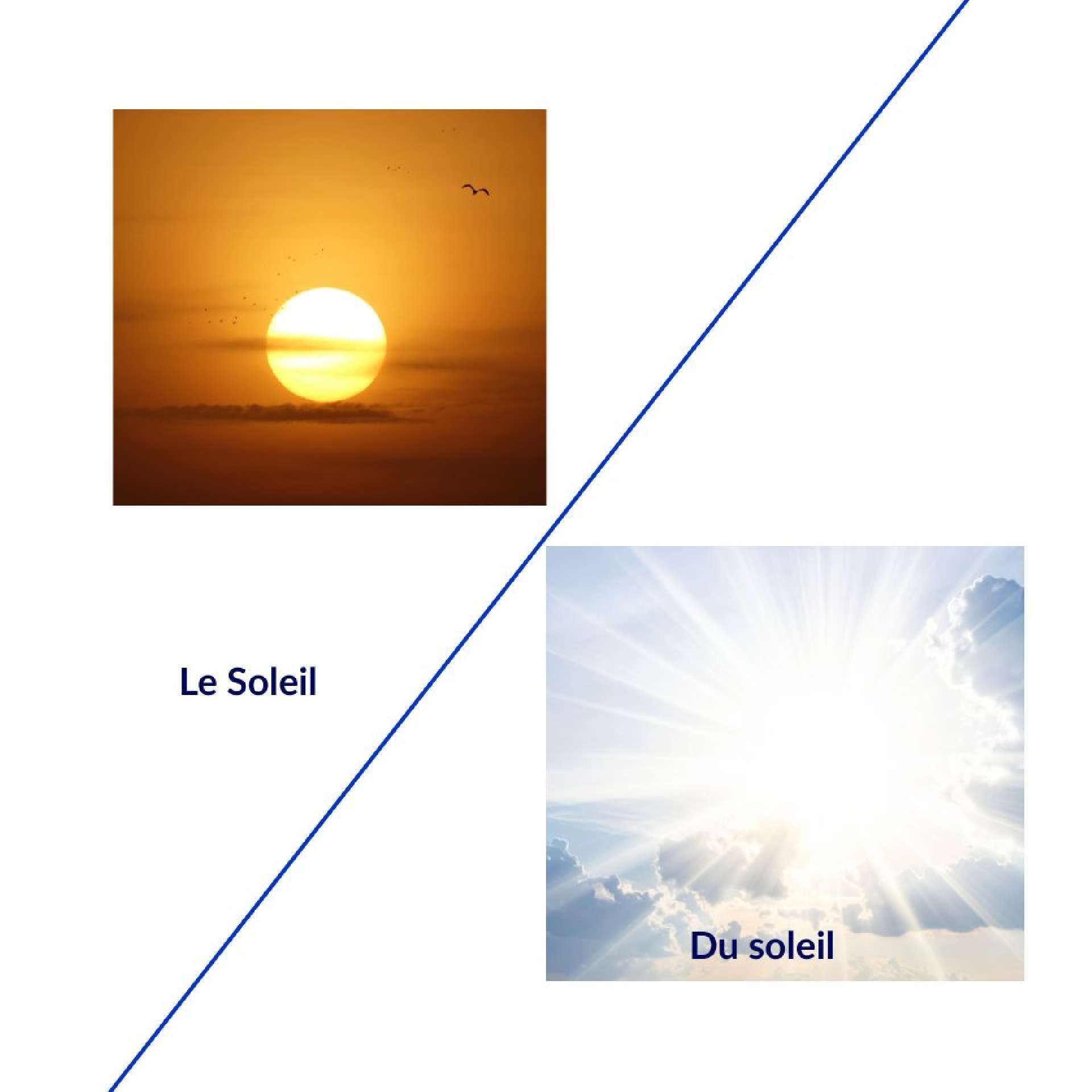
Lorsque nous parlons d’une chose unique ou connue de notre interlocuteur :  Le Soleil (il n’y en a qu’un), la Tour Eiffel (il n’y en a qu’une).

Où est la voiture ? (Où est [notre/ma] voiture ?).

Le soleil brille. (Il n’y en a qu’un).

C’est le livre de Paul. (ce livre en particulier).

Passe-moi le sel. (Passe-moi [celui] qui est sur la table, pas n’importe quel sel du magasin).

Ici, c’est simple.

Passons maintenant à quelque chose de plus compliqué, sur lequel beaucoup de personnes apprenant le français se trompent. En français, lorsque nous parlons de tous les représentants d’un groupe donné ou de concepts généraux, nous utilisons l’article défini. C’est une différence fondamentale par rapport à l’anglais (où « Love is blind » n’a pas d’article, alors qu’en français, il doit y en avoir un : L’amour est aveugle).

Les chats sont intelligents. (Les chats [en tant qu’espèce, tous les chats] sont intelligents).

J’aime la musique. (J’aime la musique [en général]).

Rappelez-vous : l’article défini est comme un doigt qui pointe. Si vous pointez quelque chose du doigt dans votre tête (« CETTE table »), utilisez Le/La. Si vous parlez de toute une catégorie (« Les CHATS sont cool »), utilisez également Les.

L’article partitif : « Un peu », « Un morceau »

C’est là que les choses se compliquent, mais nous allons y remédier tout de suite. L’article partitif est un concept qui sert à désigner une quantité indéterminée de quelque chose d’incalculable. Imaginez que tout le pain du monde forme une seule grande masse. Lorsque vous mangez un sandwich, vous ne mangez pas « tout le pain du monde », mais « une partie de cette masse ».

Formes :

DU (de + le) – genre masculin (du pain, du courage).

DE LA – genre féminin (de la confiture, de la patience).

DE L’ – devant une voyelle ou un « h » muet (de l’eau, de l’argent).

On l’utilise pour :

  • La nourriture et les boissons (pain, eau, vin, farine).

Tout ce qui ne se compte pas à l’unité reçoit un article indéfini. Cela concerne les liquides, les poudres, les viandes, le pain (en tant qu’aliment).

Je bois du café. (liquide).

Je mange du pain avec du beurre. (je le considère comme une substance).

Je mets de la confiture. 

Mais, attention au changement de sens ! Si vous commandez un café dans un café, vous pensez à une tasse (unité).

Un café, s’il vous plaît ! Les deux formes sont correctes, mais elles ont un sens différent. Un café est une abréviation de : Une tasse de café.

  • La météo et les phénomènes atmosphériques (soleil, vent, pluie).

En français, le temps est souvent exprimé par la construction Il y a (il y a) + quantité du phénomène.

Il y a du soleil aujourd’hui.

Il y a du vent.

Il y a de la pluie.

Il y a du verglas.
  • Traits de caractère et concepts abstraits.

As-tu du courage ? As-tu du talent ? As-tu de la chance ? En français, c’est une matière abstraite. Tu n’as pas « un seul courage ». Tu as « un peu de courage » en toi.

Tu as du talent. 

Il faut de la patience pour apprendre le français. 

Elle a de la chance. 

Il y a du bruit. 

Je veux du silence !

  • Activités (faire du sport, jouer d’un instrument).

C’est une spécificité française. Lorsque vous parlez de faire du sport ou de jouer d’un instrument avec le verbe faire, vous utilisez l’article partitif. Vous traitez le sport comme une matière dans laquelle vous vous plongez.

Je fais du sport. 

Je fais du tennis. (Attention, avec le verbe Jouer, ce serait au tennis !).

Je fais de la natation.

Je fais de la guitare.

Vous avez l’impression qu’il y a trop de règles ? Que le fait d’apprendre des règles par cœur vous empêche de vous exprimer ? Ce n’est pas de votre faute, c’est ainsi qu’on enseigne à l’école. Lisez l’article sur l’efficacité des méthodes d’apprentissage traditionnelles dans le monde d’aujourd’hui et sur la manière d’adopter une approche plus intuitive.

Le grand test de la pizza : Un vs. Du

Comment savoir quel article utiliser ? Le plus simple est de comprendre cette partie de la grammaire à l’aide de la nourriture.

Imaginez que vous allez dans un restaurant italien. Et, là, la situation change la grammaire.

Situation A – je mange toute la pizza.

Vous entrez dans une pizzeria. Vous avez très faim. Vous voulez commander une pizza entière, ronde, rien que pour vous. À ce moment-là, la pizza est un objet unique, concret et quantifiable. C’est une « pièce ».

Bonjour, je voudrais une pizza.

Vous utilisez l’indéfini (une), car la pizza est ici une unité. Vous pouvez dire : deux pizzas aussi.

Situation B – je mange un morceau/un peu de pizza.

Vous êtes à une fête. Quelqu’un a coupé la pizza en morceaux. Vous voulez en manger un peu, mais pas toute la pizza. Vous considérez maintenant la pizza comme une « matière/masse » et non comme une unité. Vous ne mangez pas « une pizza », vous mangez « un peu de pizza ».

Je mange de la pizza. (Je mange [un peu] de pizza.)

Vous utilisez l’article indéfini (de la), car vous vous intéressez à une partie indéterminée de l’ensemble.

Voyez-vous la différence ?

Un/Une → Tout, une unité (comptable).

Du/De la → Un morceau, une masse, une partie (non comptable).

Plus des exemples :

  • Un poulet → Un animal qui court dans la cour ou un oiseau entier rôti dans un magasin.
  • Du poulet → De la viande de poulet dans une assiette.
  • Je mange un poulet. → Je mange un poulet entier (vous avez très faim).
  • Je mange du poulet. → Je mange du poulet (en plat).

Rappelez-vous : l’article indéfini répond à la question « Combien ? ». La réponse est « Un peu, une partie ». Nous ne savons pas exactement combien, juste une certaine quantité.

Quand utiliser quel article ?

Maintenant que vous disposez d’un arsenal complet d’articles, faisons une dernière comparaison. Observez comment le sens d’une phrase change en fonction de ce petit mot. C’est la clé pour comprendre l’âme française.

Article : quand l’utiliser ? Exemple

Un / comptable, pièces individuelles. J’ai une pomme.

Du / De la incomptable, masse, nourriture. Je veux de la soupe.

Le / La objet concret, unique. Où est le chien ?

Le / La (général) goût, définitions, genres. J’adore le vin.

Pas de négation (sauf pour « être »). Je n’ai pas de temps.

Différence essentielle : « J’aime » ou « Je mange » ? (Le vs. Du)

C’est là que beaucoup de personnes font des erreurs, même après des années d’apprentissage. Il existe un groupe de verbes qui imposent toujours l’utilisation de l’article défini (le, la, les), qu’il s’agisse de nourriture ou d’abstraction.

Il s’agit des verbes « d’affection » et « de préférence » :

  • Aimer 
  • Adorer 
  • Préférer
  • Détester

Pourquoi ? Parce que si vous aimez le chocolat, vous n’aimez pas « un morceau de chocolat ». Vous aimez le chocolat en général, en tant que genre, en tant qu’idée. Tout le chocolat du monde.

En revanche, les verbes de « consommation » et de « possession » utilisent des articles partiels, car vous ne consommez qu’une partie de la réalité :

  • Manger 
  • Boire 
  • Avoir 
  • Acheter 
  • Vouloir

Comparons cela à l’aide d’exemples :

Verbe de préférence (ensemble)Verbe de consommation (partie)
J’aime le café. (En général).Je bois du café. (Maintenant, une tasse).
J’adore les épinards.Je mange des épinards.
Je déteste le poisson.Je ne mange pas de poisson. (Je ne mange pas de poisson – attention, négation !).

Voyez-vous la différence ? Aimer englobe l’ensemble du phénomène. Manger n’en englobe qu’une partie.

Le piège de la négation : le « DE » magique

C’est une règle qui fonctionne comme un rouleau compresseur. Elle écrase toutes les nuances de un, une, du, de la et ne laisse derrière elle qu’un DE plat et simple.

Règle : dans une phrase négative (avec la construction ne… pas, ne… jamais, ne… plus), les articles indéfinis et partiels se transforment en DE seul (ou D’ devant une voyelle).

En effet, la négation supprime la notion de « quantité ». Si vous n’avez pas quelque chose, vous n’en avez ni « un », ni « un peu ». Ce « de » signifie simplement « aucun ».

Voyez la différence :

  • Indéfini :

J’ai une voiture.

Je n’ai pas de voiture.

(Erreur : Je n’ai pas une voiture, sauf si vous voulez dire « je n’ai PAS UNE voiture, j’en ai deux »).

  • Article partiel :

Je mange de la viande. 

Je ne mange pas de viande.

  • Pluriel :

J’ai des amis.

Je n’ai pas d’amis.

Ce « de » fonctionne comme un effaceur. Peu importe ce qui précède. S’il y a pas, alors « de » s’ajoute presque toujours.

Exception à l’exception (parce que c’est du français)

La règle « pas de » ne fonctionne pas avec le verbe être. Le verbe « être » ne désigne ni la possession ni la consommation, mais l’identité. L’identité ne change pas avec « ne ». Après c’est ou ce sont, l’article reste le même.

C’est une catastrophe. → Ce n’est pas une catastrophe. 

C’est du vin. → Ce n’est pas du vin.

Quantités spécifiques : quand « du » disparaît-il ?
Maintenant que nous avons compris que « du » et « de la » signifient « quantité indéterminée », que se passe-t-il lorsque la quantité est déterminée ?

Lorsque vous précisez la quantité exacte de quelque chose (à l’aide d’un poids, d’un emballage ou d’un adverbe), l’article indéfini disparaît et il ne reste plus que « DE ».

Cela fonctionne comme les mathématiques :

  • Indéterminé : Je bois de l’eau →  (Combien ? On ne sait pas).
  • Déterminé : Je bois un litre d’eau → (Concret !).

Remarque : De l’ est devenu d’. Pourquoi ? Parce que « litre » a pris la fonction de déterminer la quantité.

Exemples :

  • Adverbes de quantité :

Beaucoup de travail 

Un peu de sucre 

Trop de gens 

Assez de temps

  • Emballages et mesures :

Un kilo de pommes 

Une bouteille de vin 

Une tasse de thé 

Une tranche de jambon

Attention ! Il est incorrect de dire : J’ai beaucoup des amis. La forme correcte est : J’ai beaucoup d’amis. « Beaucoup » est si fort qu’il supprime l’article.

Quelque chose pour le dessert : l’article partiel dans la musique et le sport

Pour le dessert, j’ai gardé des utilisations qui ne concernent pas la nourriture, mais essentielles dans la conversation quotidienne.

Faire du sport (pratiquer un sport)

En français, la construction faire + discipline sportive/activité nécessite toujours un article partiel. Nous considérons le sport comme une « masse d’activités ».

Je fais du tennis.

Elle fait de la natation.

Nous faisons du ski.

Jouer de la musique

Avec les instruments, c’est plus intéressant. On utilise le verbe jouer + la préposition de + l’article. Cela nous donne les formes du/de la.

Je joue du piano. 

Tu joues de la guitare. 

Piège : si tu joues à un jeu d’équipe (avec un ballon), tu utilises au (à + le), et non du !

Je joue au football. (Jeu d’équipe/ballon).

Je joue du violon. (Instrument).

Votre aide-mémoire pour vous en souvenir

Commencez-vous à vous sentir perdu ? C’est normal. La grammaire française prend du temps à maîtriser. Rassemblons tout cela en un système décisionnel simple.

Posez-vous ces questions :

  • Puis-je le compter ? (1, 2, 3…)

OUI → Utilisez Un / Une / Des.

  • S’agit-il d’une masse, d’un liquide ou d’un concept abstrait ?

OUI → Utilisez Du / De la.

  • La phrase est-elle négative (il ne s’agit pas du verbe « être ») ?

OUI → Oubliez le reste, utilisez De.

  • La quantité est-elle clairement définie (kilo, beaucoup, bouteille) ?

OUI → Utilisez DE (par exemple, beaucoup de pain).

  • Utilisez-vous un verbe de préférence (aimer, adorer) ou de consommation (manger, boire, avoir) ?

PRÉFÉRENCE : utilisez LE / LA / LES (par exemple, J’aime le pain).

CONSOMMATION : utilisez DU / DE LA (par exemple, Je mange du pain).

La grammaire française peut être complexe, mais elle a sa logique. La clé est de ne plus traduire mot à mot depuis votre langue maternelle et de commencer à ressentir le contexte. Mangez-vous un poulet (animal) ou du poulet (viande dans votre assiette) ? Avez-vous « du temps » (concept abstrait) ou « un moment » (unité de temps) ?

Vous pouvez maîtriser le français si vous arrêtez de le considérer comme un ennemi. Et vous commencez à le traiter comme un puzzle logique. Les erreurs font partie du processus. Parlez, essayez, faites des erreurs. C’est la seule façon d’atteindre la fluidité.


Lingua Impact

Laisser un commentaire

Votre adresse e-mail ne sera pas publiée. Les champs obligatoires sont indiqués avec *

We use cookies to personalise content and ads, to provide social media features and to analyse our traffic. We also share information about your use of our site with our social media, advertising and analytics partners. View more
Cookies settings
Accept
Decline
Privacy & Cookie policy
Privacy & Cookies policy
Cookie nameActive
Hello!If you come here, it is a sure sign that you value your privacy. I understand this perfectly, so I will give you a document where you will find the rules for processing personal data and using cookies and other tracking technologies in one place.Formal information at the beginning: the administrator of your personal data is me, i.e. Lingua Impact Agnieszka Kujawska, 684 rue du Chevalleret Z.A. de Moru, 60700 Pontpoint, France.I process your personal data primarily for the purposes related to your use of my website and social media. These include newsletter support, comment service, social media support, message exchange, analysis, statistics, marketing, etc.I process your personal data for the period necessary to implement individual purposes. You have the right to access, rectify, delete or limit the processing of your personal data, object to the processing, and data portability.Detailed information on the principles of processing your personal data can be found later in the Privacy Policy.If you have any doubts related to the Privacy Policy, you can contact me at any time by sending a message to contact@linguaimpact.eu.

1: Who is the administrator of your personal data?

The administrator of your personal data is me, i.e. Lingua Impact Agnieszka Kujawska, 684 rue du Chevalleret Z.A. de Moru, 60700 Pontpoint, France.This Privacy Policy applies to the website www.lingua-impact.eu.In the scope of my social media profiles, in accordance with the case law of the Court of Justice of the European Union, I am the data controller with the provider of social networks in which I have profiles. Details on the processing of personal data by individual providers of social networks can be found here:

2: Who can you contact regarding the processing of your personal data?

As part of the implementation of personal data protection in my office, I decided not to appoint a personal data protection officer due to the fact that it is not obligatory in my situation. In matters related to the protection of personal data and broadly understood privacy, you can contact us at contact@linguaimpact.eu. In the field of social media, you can additionally contact the administrators of social networks where I run my profiles directly.

3: For what purposes do I process personal data?

There is more than one of these goals. Below is a list of them, along with a more detailed overview. Appropriate legal bases for processing have also been assigned to specific purposes:
Purpose of processingDiscussion of the purpose of processingLegal basis
newsletter handlingWhen subscribing to the newsletter, you must provide the data necessary to receive it specified in the subscription form. Providing data is a prerequisite for receiving the newsletter. In addition, the system used to handle the newsletter saves your IP number that you used when subscribing to the newsletter, determines your approximate location, the e-mail client you use to handle e-mail and tracks your actions taken in connection with the messages sent to you. Messages. Therefore, I also have information about the messages you opened, the messages in which you clicked on links, etc. In the mailing system, we may also define, based on various criteria related to your activity, interests or other preferences, specific groups or segments of newsletter recipients that affect what kind of newsletters you receive. The data provided by you in connection with the subscription to the newsletter is used to operate the newsletter, which is my legally justified interest, which in this case, is the implementation of marketing objectives. Regarding the processing of information that does not come from you and has been collected automatically by the mailing system, we rely in this respect on our legitimate interest in analysing the behaviour of newsletter subscribers in order to optimise mailing activities. You can unsubscribe from the newsletter anytime by clicking on the dedicated link in each message sent as part of the newsletter or by simply contacting me. Unsubscribing from the newsletter does not lead to deleting your data from the mailing system. The data goes to the archive for the purpose of possible determination, investigation or defence of claims related to the newsletter, as well as to ensure the possibility of demonstrating that the newsletter activities were carried out in accordance with the law.Regulation (EU) 2016/679 on the protection of individuals with regard to the processing of personal data and on the free movement of such data
comment supportWhen adding a comment on my website, you must provide the data necessary to publish the comment specified in the form intended for issuing a comment/opinion. Providing data is a condition for publishing a comment. In addition, the comment system saves your IP number that you used by submitting a comment. An external provider can operate the comment system. In such a situation, the use of the system is subject to the external supplier's regulations and privacy policy. Detailed information about third-party tool providers can be found in the section dedicated to the tools I use. The data is processed in order to publish a comment, which is my legitimate interest. The comment you have added, along with your data published as part of the settings, will be visible on the page. You can modify or delete a comment at any time. The deleted comment, together with your data, goes to the archive for the purpose of possible establishment, investigation or defence of claims related to the comment.Regulation (EU) 2016/679 on the protection of individuals with regard to the processing of personal data and on the free movement of such data
contact and handling of correspondenceBy contacting me via available means of communication, e.g. e-mail, social messengers, chats, etc., you naturally provide your personal data contained in the content of the correspondence. Providing data is a prerequisite for establishing contact. In addition, the communication system records your IP address, which you use to send a message. The communication system (e.g. chat, messenger) can be operated by an external provider. In such a situation, the use of the system is subject to the external supplier's regulations and privacy policy. Detailed information about third-party tool providers can be found in the section dedicated to the tools I use. The data is processed for the purpose of communication, which is my legitimate interest. Once the communication is complete, the data goes to the archive for the purposes of possible establishment, pursuit or defence of claims related to the conducted communication.Regulation (EU) 2016/679 on the protection of individuals with regard to the processing of personal data and on the free movement of such data
creating an archiveFor the purposes of my activity, I can create archives in digital form. The archives contain personal data that I have processed in connection with you, and their scope may vary depending on what data I have received and what scope of data is justified from an archival point of view. In this case, I rely on our legitimate interest in organising and organising personal data carriers.Regulation (EU) 2016/679 on the protection of individuals with regard to the processing of personal data and on the free movement of such data
defence, establishment or redressUsing my website may give rise to certain claims on your or my part in the future. Therefore, I am entitled to process personal data to defend, establish or pursue claims. As part of this purpose, I may process any personal data that relates to a given claim; therefore, their scope may vary depending on what the claim relates to. In this case, I rely on my legitimate interest in protecting my interests.Regulation (EU) 2016/679 on the protection of individuals with regard to the processing of personal data and on the free movement of such data
creating ad audience groupsYour e-mail address stored in my database may be sent to a specific advertising system (e.g. Facebook Ads, LinkedIn Ads) to create a group of advertising recipients using this e-mail address. When using this feature, the e-mail address is hashed before being sent to Facebook to form an audience. The e-mail address will be used in the matching process carried out by the respective advertising system. Facebook does not share the e-mail address with third parties or other advertisers and deletes the e-mail address as soon as the matching process is completed. Facebook has implemented processes and procedures to ensure the confidentiality and security of the e-mail address sent to it and the set of Facebook user identifiers that create a group of recipients created using the e-mail address, among other things, through the use of technical and physical security. Creating a group of advertising recipients using your e-mail address is my legitimate interest, which in this case, is implementing my marketing goals.Regulation (EU) 2016/679 on the protection of individuals with regard to the processing of personal data and on the free movement of such data
handling social mediaSuppose you follow our profiles on social networks or interact with the content we publish on social media. In that case, we naturally see your data publicly available on your social profile. We process this data only within a given social networking site and only to operate a given social networking site, which is our legitimate interest referred to in art. If you contact me via a private message, you naturally provide me with your personal data contained in the content of the correspondence, in particular the image and the name and surname. In this case, your data is processed in order to contact you, and the basis for processing is my legitimate interest. It may happen that I will be the party initiating contact with you via social media in order to offer cooperation; then, your data will be processed in order to search for potential contractors and offer and establish cooperation, which is my legitimate interest. Messages sent to me via social media are subject to automatic archiving by means of the tools available within individual social networks. They are available to me until you delete them. You can view all messages listed with me in the private messages tab. Your use of social networks is subject to the regulations and privacy policies of the administrators of these websites, and these administrators provide you with services by electronic means, entirely independently and independently of us.Regulation (EU) 2016/679 on the protection of individuals with regard to the processing of personal data and on the free movement of such data
analysis and statistics using only Anonymous InformationI conduct analytical and statistical activities using tools provided by external suppliers. As part of the analytical tools, we only have access to Anonymous Information. The processing of Anonymous Information is based on a legitimate interest, which consists in creating, reviewing and analysing statistics related to the activity of users on the website in order to draw conclusions allowing for the subsequent optimization of my activities. From the level of Google Analytics and Facebook tools, we only have access to a set of statistics and information not assigned to specific people. Detailed information about third-party tool providers can be found in the section dedicated to the tools I use.Regulation (EU) 2016/679 on the protection of individuals with regard to the processing of personal data and on the free movement of such data
own marketing using only Anonymous InformationI conduct marketing activities using tools provided by external suppliers. We only have access to Anonymous Information as part of the analytical tools. I base the processing of Anonymous Information on a legitimate interest, which consists in conducting marketing activities based on Anonymous Information and targeting advertisements within external systems based on Anonymous Information, for the purposes of marketing my own products and services. From the level of Google Analytics and Facebook tools, we only have access to a set of statistics and information not assigned to specific people. Detailed information about third-party tool providers can be found in the section dedicated to the tools I use.Regulation (EU) 2016/679 on the protection of individuals with regard to the processing of personal data and on the free movement of such data
provision of additional functions using only Anonymous InformationOn my website, I can embed video or audio players, social widgets, comment modules, chat, newsletter forms or other tools provided by third parties. All these tools process Anonymous Information. The processing of Anonymous Information is based on a legitimate interest, which in this case consists in ensuring the possibility of using additional functions on the website. From the level of tools, I have no insight into others' information; in addition, I do not need this information for anything – Anonymous Information is processed only so that additional functions can work. Detailed information about third-party tool providers can be found in the section dedicated to the tools I use.Regulation (EU) 2016/679 on the protection of individuals with regard to the processing of personal data and on the free movement of such data
obligations related to the protection of personal dataAs a personal data administrator, I am obliged to implement obligations related to protecting personal data. Therefore, I may process your personal data insofar as it is necessary to perform these obligations (e.g. in the case of processing your request regarding your personal data). The scope of data depends on what data is needed to fulfil the obligation and prove compliance with the protection of personal data. In addition, in this case, I also rely on my legitimate interest, which consists in securing the data necessary to demonstrate accountability.Regulation (EU) 2016/679 on the protection of individuals with regard to the processing of personal data and on the free movement of such data

4: What information do I have about you?

The scope of the processed data is described in relation to each processing purpose. Information in this regard can be found above, in point 3 of the Privacy Policy. The data includes information such as:
    • first name,
    • e-mail address,
    • IP address,
    • data collected in the mailing system,
    • data related to the added comment,
    • information visible in social media profiles,
    • information contained in correspondence,
    • Anonymous Information.

5: What is "Anonymous Information"?

Moreover, we use tools that collect a lot of information about you related to the use of our website. It concerns, in particular, the following information:
    • information about the operating system and web browser,
    • subpages viewed,
    • time spent on the page,
    • transitions between individual subpages,
    • clicks on individual links,
    • Mouse movements
    • scrolling the page,
    • the source from which you go to the site,
    • the age range you are in,
    • YOUR Gender
    • Your approximate location is limited to the town.
    • Your interests are based on your online activity.
    • video recordings of your sessions on my pages,
    • heat maps illustrating your behaviour on my pages.
This information is referred to in this Privacy Policy as "Anonymous Information".Anonymous information by itself is not, in our opinion, personal information, as it does not allow us to identify you, and we do not match it with the typical personal information we collect about you. Nevertheless, taking into account the rigorous jurisprudence of the Court of Justice of the European Union and the divided opinions among lawyers, as a precautionary measure in the event that Anonymous Information is assigned the nature of personal data, we have also included detailed explanations in this privacy policy regarding the processing of this information.We are unable to provide you with access to Anonymous Information about you, as we cannot assign any of the Anonymous Information to any specific user. From the level of Google Analytics and Facebook tools, we only have access to a set of statistics and information not assigned to specific people.The processing of Anonymous Information allows you to use the functionalities available on the website. In addition, Anonymous Information is used for analytical, statistical, and marketing purposes, such as setting and targeting advertisements.Anonymous information is also processed by tool providers on the basis of their regulations and privacy policies. Anonymous Information is also used by the providers of individual tools to provide and improve services, manage them, develop new services, measure the effectiveness of advertisements, protect against fraud and abuse, as well as personalise the content and advertisements displayed on individual websites, sites and applications. Detailed information on this can be found in the section dedicated to the tools we use.

6: Where did I get your personal data from?

In most cases, you pass them on to us yourself. For example, this happens when you subscribe to the newsletter, contact via e-mail or chat, and use the functionalities available on the website or external services (e.g. social networks).In addition, some information about you may be automatically collected by the tools I use: Detailed information about third-party tool providers can be found in the section dedicated to the tools I use.

 7: Is the data safe?

I care about the safety of your personal information. We have analysed the risks associated with individual data processing processes and then implemented appropriate security and personal data protection measures. I monitor the condition of the technical infrastructure on an ongoing basis, train staff, observe the procedures applied, and introduce necessary improvements.

8: How long will I keep my personal data?

We process your personal data for as long as it is justified within a given purpose of personal data processing; therefore, the processing periods vary depending on the purpose. Please note that the termination of the processing of your data for one purpose does not necessarily lead to the complete deletion or destruction of your personal data because the same set of data may be processed for another purpose for the period indicated for it. Complete deletion or destruction of data takes place when I have completed all purposes and, in other cases, indicated in Regulation (EU) 2016/679 on the protection of natural persons with regard to the processing of personal data and on the free movement of such data.Below you will find a description of the processing periods:
    • Newsletter – data related to the newsletter will be processed for the duration of your use of the newsletter;
    • Comments- data related to the posting of a comment will be processed until you delete the comment;
    • Contact and handling of correspondence – data related to the handling of correspondence will be processed for the duration of the contact between us;
    • Archive – data related to the archive will be processed until the usefulness of the information contained in the archive expires;
    • Establishing, pursuing and defending claims – data related to claims will be processed until the claims are time-barred, whereby the period of limitation of claims may vary in the light of applicable law;
    • Audience groups – data related to audiences will be processed until it becomes unusable or you effectively raise an objection;
    • Social media – in principle, I have no influence on the period of storage of your personal data in social media. They are available on Facebook, Instagram, YouTube or LinkedIN on the basis of the regulations and privacy policies of these services. I am not able to delete your data from Facebook, Instagram, YouTube or LinkedIN – only you can do it;
    • Analysis and statistics – data related to analytics and statistics will be processed until they expire or you effectively object;
    • Self-marketing – data related to self-marketing will be processed until it ceases to be useful or you effectively raise an objection;
    • Additional tools – data related to additional tools will be processed until they expire or you effectively raise an objection;
    • Obligations related to the protection of personal data – data related to the protection of personal data will be processed until its expiration, effective objection by you or expiry of the limitation period of my liability as a personal data administrator.
If I process your personal data on the basis of your consent, you can withdraw such consent at any time: either by your action or by contacting me at the contact details provided. Withdrawal of consent does not affect the lawfulness of processing carried out on the basis of consent before its withdrawal.

9: Who are the recipients of personal data?

We risk saying that modern business is not able to do without services provided by third parties. I also use such services. Some of these services are related to the processing of your personal data. External service providers who are involved in the processing of your personal data are:
    • hosting provider – for the purpose of storing data on the server;
    • mailing system provider – for the purposes of using the mailing system;
    • chat provider – for the purpose of contact via chat;
    • supplier of the pop-up display system – for the purpose of displaying pop-ups;
    • provider of a tool for managing landing pages – for the purpose of collecting data via landing pages;
    • a cloud computing provider – for the use of cloud solutions;
    • accounting office – for the purposes of using accounting services;
    • law firm – for the purposes of providing legal services to me;
    • technical service – for the purposes of carrying out technical works related to those areas in which data are processed;
    • other subcontractors, in particular IT solution providers – for the purposes of cooperation with various subcontractors who may have access to your personal data, if they provide services to the extent related to such access.
If necessary, your data may be made available to a legal advisor or attorney bound by professional secrecy. The need may arise from the need to use legal assistance that requires access to your personal data.In addition, if necessary, your personal data may be made available to entities, bodies or institutions authorised to obtain access to data on the basis of legal provisions, such as the police, security services, courts, and public prosecutor's offices.Moreover, when it comes to Anonymous Information, the providers of tools or plugins that collect Anonymous Information have access to it. The providers of these tools are independent administrators of the data collected in them and may share this data on the terms specified by them in their own regulations and privacy policies, over which I have no influence.

10: Do I transfer data to third countries or international organizations?

Yes, part of the processing of your personal data may involve their transfer to third countries.I transfer your personal data to third countries in connection with the use of tools using resources located in third countries, in particular in the USA. The providers of these tools guarantee an adequate level of protection of personal data through appropriate compliance mechanisms provided for by Regulation (EU) 2016/679 on the protection of natural persons with regard to the processing of personal data and on the free movement of such data, in particular through the use of standard contractual clauses.Currently, your personal data is transferred to third countries in connection with the use of the following solutions:
Type of solutionSolution providerThird country
E-mailGoogleUSA
Data BackupGoogleUSA
In addition, Anonymous Information collected in connection with the use of the tools indicated in the Annex to this Privacy Policy may be transferred to third countries, in particular the USA.

11: Do I use profiling?

We do not make decisions for you based solely on automated processing, including profiling, which would have legal effects on you or similarly significantly affect you. Yes, we use tools that can take specific actions depending on the information collected as part of the tracking mechanisms. However, we believe that these actions do not have a significant impact on you because they do not differentiate your situation as a customer, do not affect the terms of the contract, which you can conclude with us, etc.By using certain tools, we can, for example, direct personalised advertisements to you based on your previous actions taken on the website or suggest products that may be of interest to you. I am talking about so-called behavioural advertising. We encourage you to learn more about behavioural advertising, in particular regarding privacy issues. Detailed information, along with the ability to manage your behavioural advertising settings, can be found here.

12: What are your rights?

Regulation (EU) 2016/679 on the protection of natural persons with regard to the processing of personal data and on the free movement of such data grants you the following potential rights in relation to the processing of your personal data:
    • the right to access your data and receive a copy of it
    • the right to rectify (correct) your data
    • the right to delete data (if, in your opinion, there are no grounds for me to process your data, you can request that I delete it),
    • the right to limit data processing (you can request that we limit the processing of data only to their storage or performance of activities agreed with you if, in your opinion, we have incorrect data or we process it unjustifiably),
    • the right to object to the processing of data (you have the right to object to the processing of data on the basis of a legitimate interest; you should indicate a specific situation that, in your opinion, justifies the termination of the processing covered by the objection; we will stop processing your data for these purposes unless we prove that the grounds for data processing by us override your rights or that your data is necessary for us to establish, assert or defend claims),
    • the right to transfer data (you have the right to receive from us, in a structured, commonly used, machine-readable format, personal data that you provided to us on the basis of a contract or your consent; you can commission us to send this data directly to another entity),
    • the right to withdraw consent to the processing of personal data if you have previously given such consent,
    • the right to lodge a complaint with the supervisory body (if you find that we are processing data unlawfully, you can file a complaint with the President of the Office for Personal Data Protection or another competent supervisory authority).
I encourage you to familiarise yourself with the provisions describing the rules related to the implementation of the above-mentioned rights. For our part, we consider it necessary to explain to you that the above-mentioned rights are not absolute, and you will not be entitled to all activities of processing your personal data.I emphasise that you always have one of the rights indicated above; if you consider that when processing your personal data, we have committed a violation of the provisions on the protection of personal data, you have the opportunity to lodge a complaint with the supervisory authority.

13: Do I use cookies and what are they exactly?

Our website, like almost all other websites, uses cookies.Cookies are small text information stored on your end device (e.g. computer, tablet, smartphone) that can be read by our ICT system (own cookies) or ICT systems of third parties (third-party cookies). In cookies, specific information can be saved and stored, which ICT systems can then access for specific purposes.Some of the cookies we use are deleted after the end of the web browser session, i.e. after closing it (so-called session cookies). Other cookies are stored on your device and enable us to recognize your browser the next time you access the site (permanent cookies).If you want to learn more about cookies, you can see, for example, this material.

14: On what basis do I use cookies?

We use cookies on the basis of your consent, except when cookies are necessary for the proper provision of electronic services to you.Cookies that are not necessary for the proper provision of electronic services remain blocked until you consent to the use of cookies. During your first visit to the website, we display a message asking for your consent along with the possibility of managing cookies, i.e. deciding which cookies you agree to and which you want to block.

15: Can you disable cookies?

Yes, you can manage cookie settings within your web browser. You can block all or select cookies. You can also block cookies from specific websites. You can also delete previously saved cookies and other websites and plug-in data at any time.Web browsers also offer the option of using incognito mode. You can use it if you do not want information about visited pages and downloaded files to be saved in your browsing and download history. Cookies created in incognito mode are deleted when all incognito windows are closed.Browser plug-ins are also available to control cookies, such as Ghostery. The option to control cookies may also be provided by additional software, in particular anti-virus packages, etc.In addition, there are tools available on the Internet that allow you to control certain types of cookies, in particular for the collective management of behavioural advertising settings.I also give you the ability to control cookies directly from my website. We have implemented a special cookie management mechanism that allows you to block cookies that you do not want. Remember that disabling or limiting the use of cookies may prevent you from using some of the functions available on our website and cause difficulties in using the website, as well as many other websites that use cookies. For example, if you block cookies from social plug-ins, buttons, widgets and social functions implemented on the website may not be available to you.

16: For what purposes do I use my own cookies?

Own cookies are used to ensure the proper functioning of individual mechanisms of the website, such as the correct submission of the form visible on the website, support for newsletter forms, etc. Own cookies also store information about the cookie settings defined by you, made from the level of the cookie management mechanism.

17: What third-party cookies are used?

A list of tools that require the use of cookies and a description of the cookies used can be found in the appendix to this Privacy Policy.

18: Do I track your behaviour on the site?

Yes, I use third-party providers to collect information about your activities on the site. These tools are described in detail in the appendix to this Privacy Policy.

19: Do I target you with targeted advertising?

Yes, I use Facebook Ads, under which I can target specific target groups defined on the basis of various criteria such as age, gender, interests, profession, job and activities previously undertaken on my website. These tools are described in detail in the appendix to this Privacy Policy.

20: How can you manage your privacy?

The answer to this question can be found in many places in this privacy policy when describing individual tools, behavioural advertising, consent to cookies, etc. Nevertheless, for your convenience, we have gathered this information once again in one place. Below you will find a list of options for managing your privacy.
    • cookie settings in the web browser,
    • browser plugins supporting the management of cookies, e.g. Ghostery;
    • additional cookie management software,
    • incognito mode in a web browser,
    • behavioural advertising settings, e.g. youronlinechoices.com,
    • mechanism for managing cookies from my website;
    • Google Analytics Opt-out

21: Is there anything else you should know?

As you can see, the subject of personal data processing, the use of cookies and privacy management, in general, is quite complicated. I have made every effort to. We have made every effort to ensure that this document provides you with as much knowledge as possible on issues important to you. If anything is unclear to you, you want to know more, or just talk about your privacy, write to me at contact@linguaimpact.eu.

22: Can this privacy policy be changed?

Yes, we can modify this privacy policy, in particular, due to technological changes and changes in the law. If you are a registered user, you will receive a message about each change to the Privacy Policy. Changes to the Privacy Policy shall take effect at the earliest after 7 days. All archived versions of the privacy policy are linked below.

Appendix to the Privacy Policy

LIST OF TOOLS USING COOKIES

Name of toolDescription of operation and cookies
Google Tag ManagerI use the Google Tag Manager tool provided by the US company Google LLC, which is a tool used to manage tags and load scripts within the site. Google Tag Manager, as a tool itself, does not collect any information other than what is necessary for its proper operation. However, it is responsible for loading other scripts described below.
Google AnalyticsI am using the Google Analytics tool provided by the US company Google LLC. In order to use Google Analytics, we have implemented a special Google Analytics tracking code in the website code. The tracking code uses Google LLC cookies for the Google Analytics service. You can block the Google Analytics tracking code at any time by installing the browser add-on provided by Google. Google Analytics automatically collects information about your activity on my website. I emphasise that as part of Google Analytics, I only have access to Anonymous Information. Thanks to the information collected in this way, I can analyse user behaviour on my website and keep statistics related to it, and then draw conclusions from these statistics in order to design solutions that improve the effectiveness of the website. If you are interested in details related to Google's use of data from websites and applications that use Google services, I encourage you to read this information.
Meta PixelI use the Meta advertising system provided by the American company Meta Platform Inc. In order to target you with ads personalised in terms of your behaviour on my website, I have implemented Pixel Meta, which automatically transfers information about your activity on my website to the Meta advertising system. As part of the Meta advertising system, I have access only to Anonymous Information. Thanks to the information collected in this way, I am able to show you ads within the Meta advertising system depending on your behaviour on my website and to measure the effectiveness of advertising campaigns in order to draw conclusions that allow optimising these campaigns in terms of effectiveness. Meta Platform Inc. may combine information collected using Pixel Meta with other information about you collected as part of your use of the services managed by the company (including Facebook and Instagram) and use it for their purposes, including marketing. Such Facebook activities are no longer dependent on us, and you can search for information about them directly in Facebook's privacy policy. You can also manage your privacy settings from your Facebook account. Here you will find useful information in this regard.
Facebook ConnectMy website uses plugins, buttons and other social media tools, hereinafter collectively referred to as "plugins", related to social media sites managed by the US company Meta Platform Inc. Thanks to this, you have the opportunity to use selected social features on my pages, e.g. like button, share button, etc. The plugins collect information about your activity on my site. I don't have access to this information. For me, it is only important that the plugins work properly. The information collected by the plugins may be used by Meta Platform Inc. for its own purposes, such as improving its own products, creating user profiles, analysing and optimising its own activities, and targeting ads, which, however, I have no real influence on. You can find details in this regard in the Meta privacy policy.
Google AdsI use the remarketing features available under the Google advertising system the US company Google LLC provided. When you visit our website, a Google cookie remarketing file is automatically left on your device, which collects information about your activity on our website. Thanks to the information collected in this way, I am able to show you ads within the Google network depending on your behaviour on my website. For example, if you display a product, the remarketing cookie file will record information about this fact, allowing us to send you an advertisement regarding that product or any other that we deem appropriate. This advertisement will be displayed to you within the Google network while you use the Internet, browse other websites, etc. I emphasise that when using Google Ads, I only use Anonymous Information. Using Google Ads, I can only define the audiences we'd like our ads to reach. On this basis, Google decides when and how to present our advertisement to you. If you do not want to receive personalised ads, you can manage your ad settings directly on the Google side: https://adssettings.google.com/. Suppose you are interested in details related to Google's use of data from websites and applications that use Google services. In that case, I encourage you to read this information.
LinkedIN Insight TagI use the advertising features available on LinkedIn provided by LinkedIn Ireland Unlimited Company. In order to target you with ads personalised in terms of your behaviour on my website, I have implemented LinkedIn Insight Tag, which automatically transfers information about your activity on my website to the LinkedIn advertising system. As part of the LinkedIn advertising system, I have access only to Anonymous Information. Thanks to the information collected in this way, I can show you ads within the LinkedIn advertising system depending on your behaviour on my website and measure the effectiveness of advertising campaigns to draw conclusions that allow optimising these campaigns in terms of effectiveness. LinkedIn also uses the information collected by LinkedIn to deliver advertisements and reporting, improve security on LinkedIn, research and product development. This information is also used to generate aggregated and anonymous measurements about using the LinkedIN advertising service, for example, to calculate the total number of conversions made via LinkedIN. Details in this regard are described in the LinkedIn privacy policy. You can manage your LinkedIn privacy settings here.
MailerLiteI use the MailerLite mailing system provided by the Irish company MailerLite Limited. Subscription forms for mailing lists embedded on my pages may use cookie technology to ensure the proper functioning of these forms and measure their conversion. For information collected in MailerLite cookies in order to I do not have access to the proper functioning of the forms – I am only interested in the form working properly. When it comes to measuring the conversion of enrollment forms, I only have access to anonymous statistical information. In addition, I use the additional function of the MailerLite system, which consists in controlling the frequency of pop-ups with subscription forms to mailing lists. For this purpose, the MailerLite cookie is used, which stores information about the pop-up being displayed to you in order not to display it to you again for a specified period of time. In addition, I use an additional feature of the MailerLite system – a website builder. The websites created in this way are stored within the MailerLite infrastructure and use MailerLite cookies to ensure their proper operation and provide insight into anonymous statistics to assess the effectiveness of the websites.
HotjarI use the Hotjar tool to better understand your needs and optimise my website for your experience. The tool is provided by Hotjar Limited. Hotjar records every visitor to my site and allows you to play a video recording of their traffic on my site, as well as generate so-called heat maps. As part of the Hotjar tool, I do not have access to information that allows us to identify you because Hotjar does not record the process of completing the forms intended for the transfer of personal data. In order to use Hotjar, we have implemented a special Hotjar tracking code in my page code. The tracking code uses cookies from Hotjar Limited. The information collected as part of cookies is stored by Hotjar as part of a pseudonymous user profile. Neither Hotjar nor we use this information to identify you. You can object to Hotjar creating your user profile, Hotjar storing information about your use of my site and Hotjar's use of cookies here. If you are interested in details related to data processing within Hotjar, I encourage you to read Hotjar's privacy policy.
Save settings
Cookies settings
Select your currency
Euro
Złoty polonais